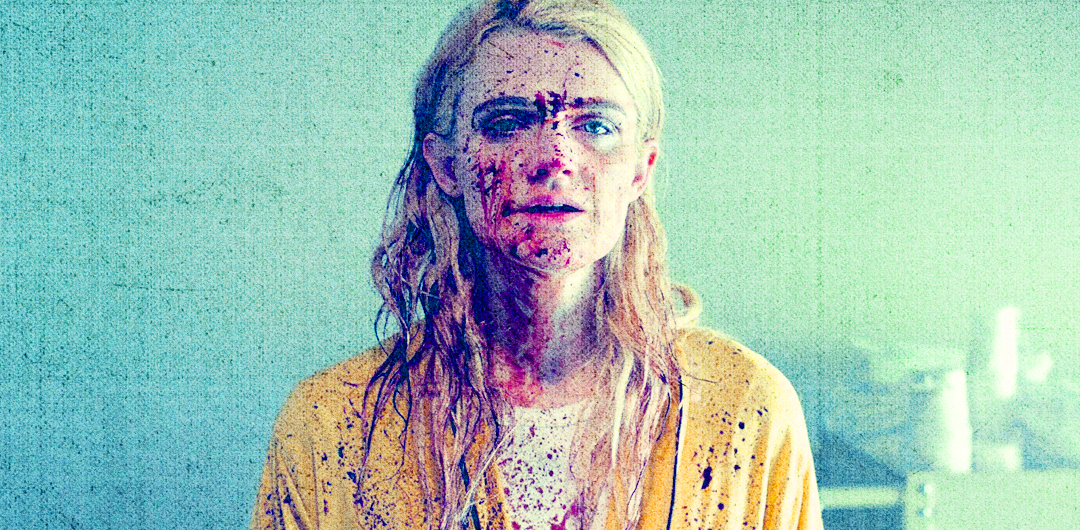
It’s already challenging to make a movie, but now try doing it when every door has been shut in your face or when your ideas have been stolen by someone else or when you’ve been harassed, assaulted, or underestimated, all because of your gender. As we know, the film industry has not always been kind to women, even less so in exploitation and horror. For decades, women were expected to play Victim #1, scream, and bare it all. If they were lucky, they got to be the Final Girl. Not even a final woman. A girl. And that’s it. While it’s gotten better today, it’s still rare to find women behind the camera directing, editing, writing, or producing horror films. So when we see independent genre films directed by women, we feel deep respect. We celebrate them. We can see how far we’ve come and how much farther we need to go. We can appreciate how the 1940s underground filmmaker Maya Deren can lead us to an Iranian-American filmmaker like Ana Lily Amanpour. We’ve collected twenty of our favorite independent horror films directed by women, from classic ’80s rippers that tear through sorority houses to devastating meditations on trauma. Watch, celebrate, repeat. (Annie Choi)
Bad Things (Stewart Thorndike, 2023)
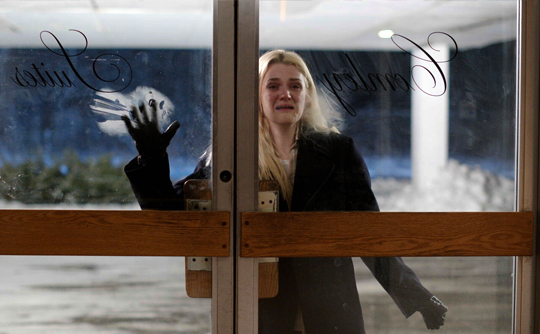
The 21st century needs more horror movies like this one. Bad Things is an icy headtrip from filmmaker Stewart Thorndike, who cut her showbiz teeth by acting in Stanley Kubrick’s Eyes Wide Shut. Like Lyle, Thorndike’s overlooked debut, this handmade horror movie normalizes queer relationships in the eye of an emotional shitstorm—all against the backdrop of a haunted motel in the dead of winter. Fueled by a psychically devastating core, bursts of shocking violence, and a beguiling role from 1980s icon Molly Ringwald, Bad Things proves that bajillion dollar budgets and snarky marketing campaigns will never eclipse humanity and passion. This movie gave me the best cry I’ve had in months and I can’t wait to do it all over again. (Joseph A. Ziemba)
Black Mamba (Belinda M. Wilson, 2016)
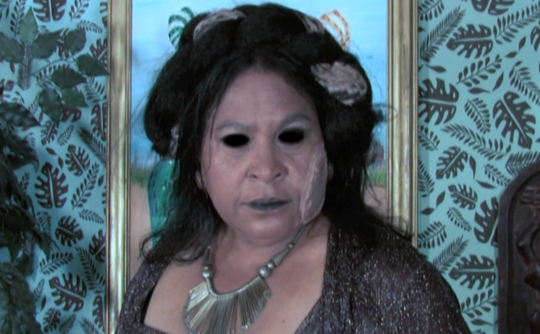
A childless couple, a cheatin’ heart woman, a vain young lady, and a man obsessed with mermaids turn to their neighborhood witch for help. Naturally—or should I say supernaturally—they all get much more than they bargained for. Shot almost completely on green screen, Black Mamba is an exercise in DIY CGI. Deep sea creatures, worms, spiders, and gore are all CGI, as well as cars, vases, picture frames, and furniture. There’s no reason to green screen a suburban living room or a kitchen pantry, but I’m glad director Belinda M. Wilson did. The sheer amount of work and level of detail in the effects are testaments to Wilson’s drive and wild imagination. Black Mamba stands out not only because of the elaborate script and homegrown effects, but also because there are painfully few Black woman directors working in low-budget horror, let alone one with an Ed.D. (AC)
The Boy From Hell (Mari Asato, 2004)
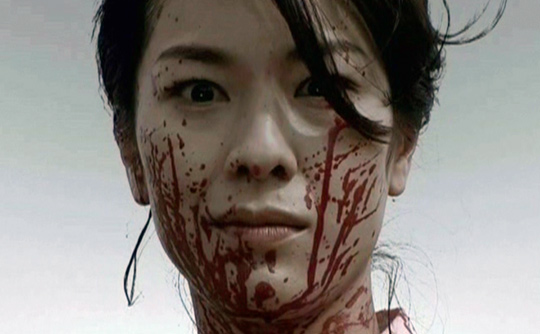
The Boy from Hell is unlike anything else in Mari Asato’s filmography. Cheap, reckless, and fueled by comic book gore, the movie grafts a Universal horror template onto a public access soap opera. We end up with an unexpected voyage to a grotesque subconsciousness, one that’s just as electric as the manga that inspired it. Green screen inserts and animated transitions melt into beautifully composed shots of barren landscapes. The soundtrack copies Goblin’s electro-harpsichord soundtrack for Deep Red and puts it to good use during a bizarre tangent involving pigeons. The unhinged violence, melodrama (“One more brain transplant will save him!”), and lightning-fast pace all culminate in a literal trip to hell. It materializes as an acid-tinged, CGI nightmare zone that’s almost as shocking as the one in Spawn. But bubbling below the madness is a hint of what would define Asato’s work in the future—a sincere, emotional core. (JZ)
Censor (Prano Bailey-Bond, 2021)
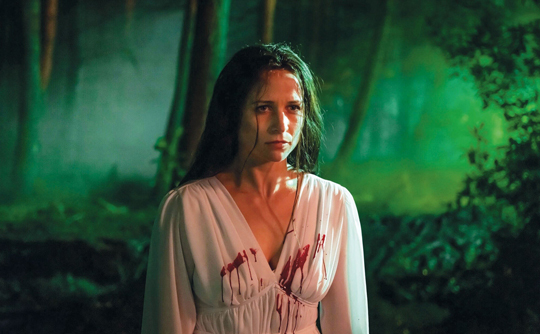
Censor is set during the Video Nasty era of censorship in the United Kingdom when movies were mercilessly cut or banned because of “obscene” content. The censors were gatekeepers of art who lorded over horror productions, forcing filmmakers to change their content in the name of propriety. If you’ve ever wondered who was a part of the propriety police, then Censor might give you some insight. The film follows a censor who reviews a film that plunges her back to her tragic, bloody childhood. Her world begins to unravel and the lines blur between psychosis and reality. Directed and co-written by Prano Bailey-Bond, Censor is stylishly mesmerizing and gripping, vacillating between quiet dread and explosive visuals. This is a film that would’ve been a Video Nasty had it been released 30 years ago. (AC)
The Devil’s Doorway (Aislinn Clarke, 2018)
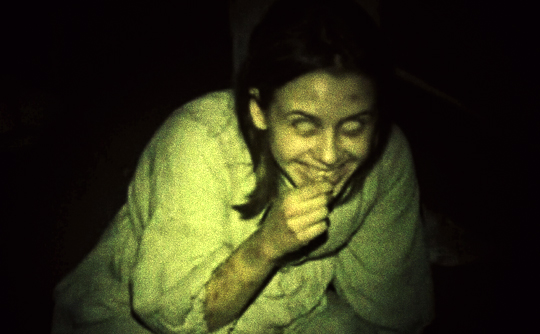
The beats might be familiar, but I’ve never seen a found footage horror movie quite like this one. Directed and co-written by Aislinn Clarke and shot on beautiful 16mm film stock, The Devil’s Doorway tells the story of two priests as they investigate Satanic occurrences at a monastery. Incorporating the real-life setting of Ireland’s Magdalene Laundries—Catholic institutions that housed “fallen women”—Clarke utilizes the found footage format to explore deeply personal themes of generational trauma and motherhood. This emotional core is what makes The Devil’s Doorway so compelling. Artfully orchestrated and thoroughly chilling, this movie feels like a haunted scrapbook that was never meant to be opened. (JZ)
A Girl Walks Home Alone At Night (Ana Lily Amirpour, 2014)
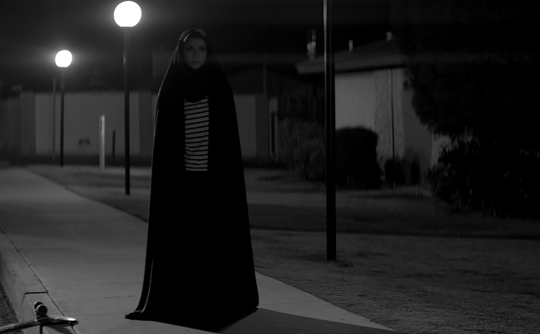
What if a vampire terrorizing a neighborhood was actually a young woman on a skateboard? And what if instead of skulking around cobblestone streets or gothic gardens, she was riding around the streets of a ghost town in Iran? Directed and written by Ana Lily Amirpour, A Girl Walks Home Alone At Night is a much-needed modern update on the classic vampire tale. Instead of a pale-skinned man with a ponytail who drinks from goblets of blood in a bordello, there’s a young Iranian woman whose chador (a headscarf cloak garment) doubles as a Dracula cape. She listens to music in her cozy studio and wears a striped T-shirt that I’m pretty sure I own too. You can watch A Girl Walks Home Alone At Night through a feminist lens and see a young woman pick off bad men in the dark alleys. Or you can see the film as a cultural snapshot that explores the hardships of Iranians. Or you can see it as a coming-of-age story or a vampire western or a classic tale of what goes around, comes around. Like the best books and films, it’s open to interpretation and each perspective is deep and rewarding in its own way. (AC)
Hair Wolf (Mariama Diallo, 2018)
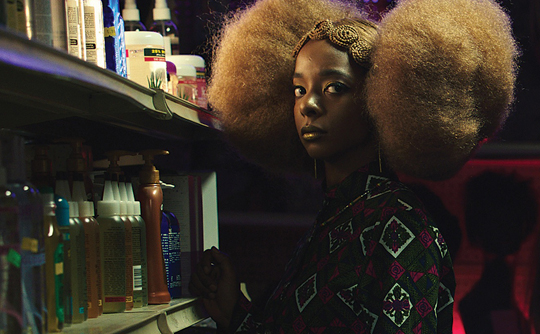
Hair Wolf follows Black hair stylists facing the biggest threat Black hair stylists can face: white people. “Your hair is so beautiful . . . can I touch it?” Cue the gasps and the laughter. Writer/director Mariama Diallo mercilessly roasts self-obsessed white women and cultural appropriation. Sure they’re easy targets, but I’m not above it. Nor are you. But the humor goes both ways: when a stylist goes platinum blonde her personality changes to match. Clocking in at a tidy twelve minutes packed with humor, playful tropes, and social commentary, Hair Wolf is a reminder that there are some horrors in this world that are less gory but more cultural. (AC)
Humanoids from the Deep (Barbara Peeters & Jimmy T. Murakami,1980)
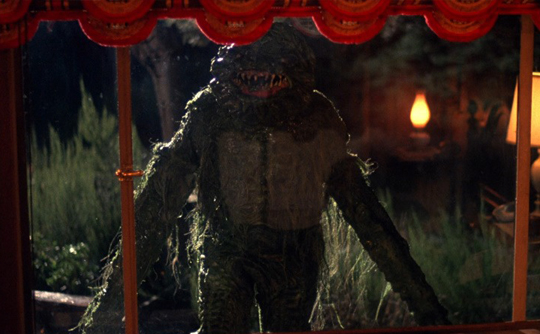
It’s a tale as old as time: nefarious mutants in the water lay waste to a quiet fishing town, murdering the men and assaulting the women in an effort to mate and create a new mutant species. Director Barbara Peeters came up as a filmmaker during a time when women were rarely welcome behind the camera. Humanoids from the Deep is a textbook example of a toxic environment, both in the water and out. Peeters shot the movie as she saw fit: plenty of nudity and violence, but no on-screen assault. Roger Corman felt differently and added multiple rape scenes after the fact, without telling the filmmakers or the actors. Peeters, star Ann Turkel, and other women behind the scenes were rightfully livid and tried to stop the release, to no avail. Humanoids from the Deep is a drive-in, grindhouse classic, but it is also a document of exploitation of another kind. (AC)
Limbo (Tina Krause, 1999)
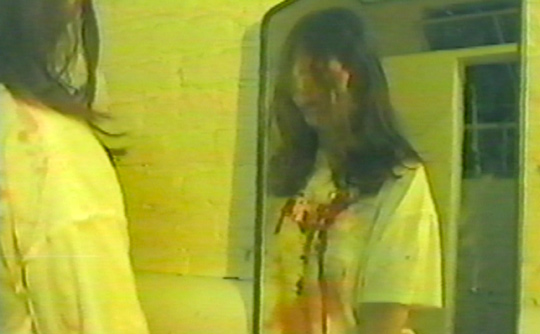
Tina Krause is a locomotive cosplaying as a human. Best known for her work with W.A.V.E. Productions and starring in over 100 movies over the past two decades, Krause has established herself as an unstoppable warrior from the DIY fringes. Written, directed, and produced by Krause, Limbo is a testament to her experience, ambition, and determination. The film follows three days in the life of a woman named Elizabeth as she deals with identity issues, sexist mouth-breathers, supernatural manifestations . . . and a trip to hell. Combining video collage experiments with a dreamy horror mood, Limbo is what might happen if David Lynch and Nine Inch Nails collaborated on a shot-on-video horror movie. (AC/JZ)
The Love Witch (Anna Biller, 2016)
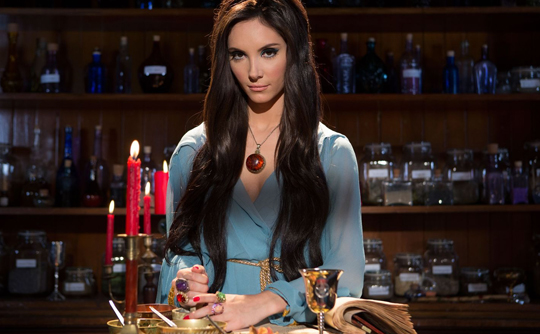
The title explains everything you need to know, which is to say that The Love Witch is an opulent, immersive experience that few independent genre films in the 21st century have matched. This film is a master class in cinematic world-building, from cinematography to art direction. Each set, prop, and costume is a work of art that was meticulously created for the film, which was gorgeously shot on 35mm. There’s not a single detail that pulls you out of the world; you can practically smell the flowery perfume and intoxicating love potions. Writer/director Anna Biller pays homage to the 70s exploitation films that clearly influenced her, but the film never feels derivative. Instead, it does the opposite and shows you the possibilities of where genre can go. Biller has been criticized for insensitive, problematic comments (and has since apologized), leaving us with the age-old question of whether or not we can separate a film from the filmmaker. Ignoring their work wholesale means ignoring their accomplishment as a minority in an industry and genre that woefully lacks representation. (AC)
Lurkers (Roberta Findlay, 1988)
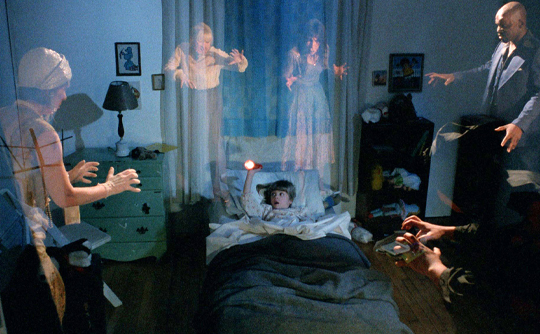
Co-written by Harriette Vidal and directed by genre legend (and classic NYC curmudgeon) Roberta Findlay, Lurkers tells the story of Cathy—a cellist whose traumatic childhood may have been the result of supernatural forces. From the bizarre interludes to the misanthropic vibe, from the weirdo makeup effects by Ed French (Terminator 2) to the overheated score, there’s no denying that this is a Roberta Findlay movie. But what makes Lurkers a standout in her filmography, and low budget ‘80s horror in general, is the way Findlay remixes familiar tropes to share a sincere story of one woman’s battle against demons of all kinds. It’s a fitting coda to the themes that Findlay explored in the earlier A Woman’s Torment. (JZ)
Meshes of the Afternoon (Maya Deren & Alexandr Hackenschmied, 1943)
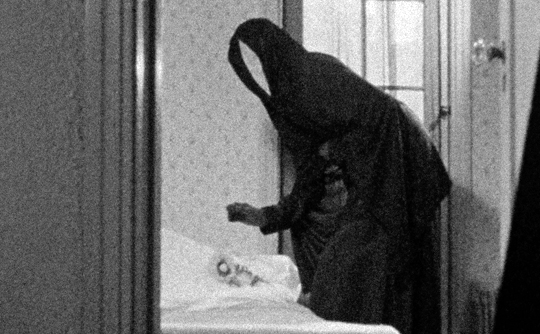
Maya Deren was a dancer, writer, activist, filmmaker, and the “mother of the underground film.” Meshes of the Afternoon, the seminal avant garde short that she co-directed with her husband, explores the unconsciousness and what she called “the inner realities of the individual.” We follow a woman through a surreal, ominous dream that is beautiful, strange, and disembodied. Knives, keys, figures clad in black veils, and contorted bodies come together with askew camera angles to imbue a sense of beauty and dread. Repeated imagery echoes how our subconscious works—it gets trapped in cycles that ramp up until it bursts. At a time when women couldn’t have their own credit cards, this film feels incredibly modern and liberating. (AC)
Mirror Mirror (Marina Sargenti, 1990)
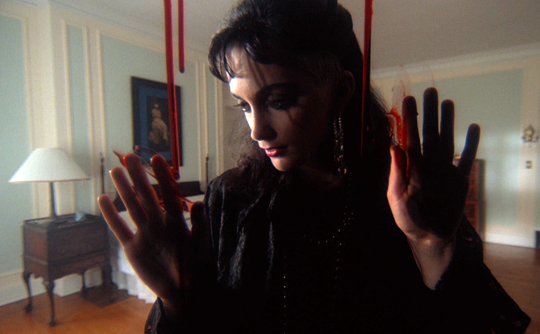
Before The Craft, there was Mirror Mirror. Co-written by sisters Annette and Gina Cascone (creators of the middle school horror book series Deadtime Stories) and directed by Marina Sargenti, the film follows high school goth Megan (Rainbow Harvest, a dead ringer for Winona Ryder’s Lydia Deetz character in Beetlejuice) as she deals with typical teenage stuff: crushes, bullies, and a haunted mirror that grants her supernatural powers. Mirror Mirror combines YA vibes straight out of a Christopher Pike novel with plenty of R-rated thrills. But the film’s most notable—and enjoyable—aspect is its nuanced portrayal of relationships between the women characters, which was rare for the horror genre in 1990. This movie gets more comforting every time I watch it. (JZ)
A Night to Dismember (Doris Wishman, 1983)
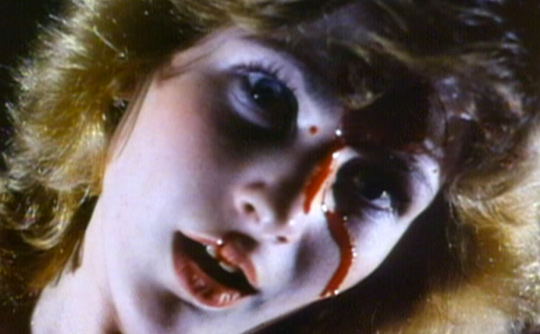
Doris Wishman was a boon to humankind. And A Night to Dismember is her gospel. Vikki Kent (’80s adult star Samantha Fox) returns home after a stint in a mental institution. From there, this movie pretty much forges a genre of its own. The pace moves like a bullet, loosely throwing together erratic violence and dream-like visuals with the collage aesthetic of an early Guided By Voices record. Soundtrack cues comprised of Jazzercise schlock, spooky library music, and wailing ’80s shit-rock overlap. Dialogue is dubbed in the “Doris Wishman Style,” which means that we hear voices, but don’t see mouths moving and the camera focuses on an ashtray. Every frame of this movie is a tiny masterpiece. (JZ)
Prevenge (Alice Lowe, 2016)
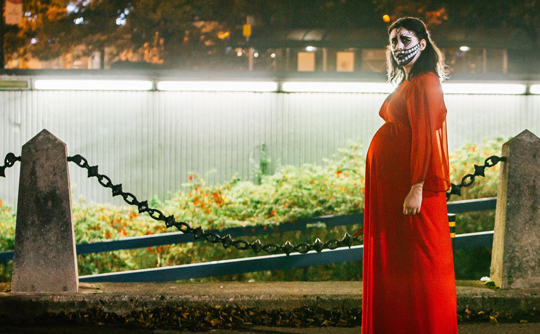
After watching Prevenge, you’ll never trust a baby again. Ruth (Alice Lowe) is having a kid. But most pregnancies aren’t plagued by a talking fetus that compels mommy to kill. Prevenge is a confident melding of pathos and pitch black humor that ends up feeling like American Psycho mixed with The Brood as envisioned by Frank Henenlotter. Written and directed by star Alice Lowe during her third trimester of pregnancy, this is an impressive inversion of gender expectations in slasher movies. But it’s also a beautiful exercise in horror mood, complete with elegant visuals, a killer synth score, and squirmy violence. (JZ)
Possibly in Michigan (Cecelia Condit, 1983)

I could watch this movie 3000 times and it still wouldn’t be enough. Possibly in Michigan is part of a series of experimental video shorts by artist Cecelia Condit that served as a coping mechanism after she unknowingly dated a real-life murderer. Presented as a day in the life of two women as they deal with a male stalker, this is cathartic surrealism at its most inspiring. Condit uses Casiocore songs (written and performed by Karen Skladany, who also stars in the film), multimedia collage, and crude bloodshed to build an anxious netherworld—one where grotesque secrets lurk behind every rubber animal mask. But through it all, Condit’s resolve is crystal clear. I’m awed by her ability to confront personal demons with such a savage sense of humor (“They had two things in common: violence and perfume.”). Possibly in Michigan is an essential watch for anyone with a beating heart, and one of the most important shot-on-video horror films in history—even at 12 minutes long. (JZ)
The Slumber Party Massacre (Amy Holden Jones, 1982)
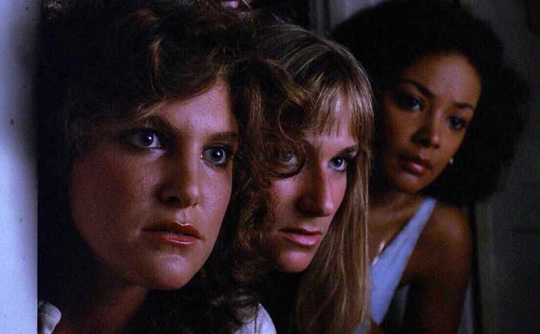
Amy Holden Jones turned down an editing job on E.T. to direct this movie. She made the right choice. Written as a commentary on the inherent sexism of slashers by feminist icon Rita Mae Brown (but shot completely straight), The Slumber Party Massacre is a terrific inside joke that also delivers the goods as a low budget photocopy of Halloween—complete with a killer who gets figuratively castrated when the tip of his power drill is hacked off. FYI, I’d like to be buried with this movie’s evocative homemade Casio score by Ralph Jones. (JZ)
Sorority House Massacre (Carol Frank, 1986)
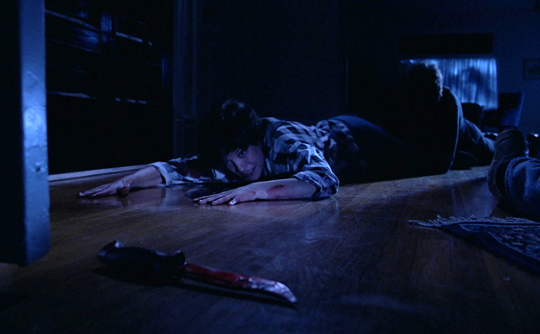
Who will survive the final exam?! After working as a production assistant on Slumber Party Massacre, filmmaker Carol Frank was given carte blanche by Roger Corman to make her own slasher movie. And that’s how we ended up with Sorority House Massacre, the most unique—and misunderstood—slasher of 1986. Like Slumber Party Massacre before it, this movie inverts the traditional gender expectations of 1980s slashers while doubling as a photocopy of Halloween. But thanks to the dreamy photography (and dreamier dream sequences), a focus on women’s perspectives, and the greatest cameo by a Smurfs piñata in motion picture history, Sorority House Massacre ends up feeling like a cozy blanket that was stitched together by the spirits of Halloween, Beaches, and Saved By the Bell. This is also known as paradise. (JZ)
The Strangeness (Melanie Anne Phillips, 1985)
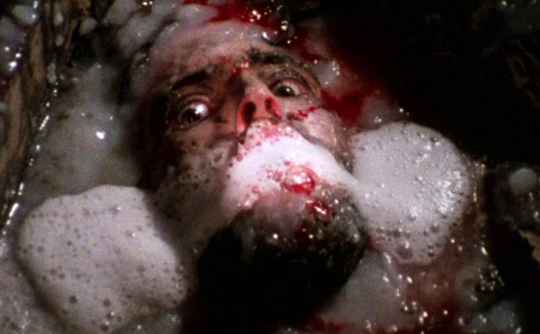
This is the most ambitious movie ever made in a California garage for $25,000. A Lovecraftian, slow cinema labyrinth that follows cave spelunkers as they encounter a Cthulhu-esque stop motion creature, this movie envelops you like a dreamy fog. From the handmade cave sets to the ominous synth score, The Strangeness rewards patient viewers with a comforting, unearthly experience. Director Melanie Anne Phillips transitioned in the early 1990s and would go on to work with the International Foundation for Gender Education. In 1994, she founded the first online transgender support site. According to script writer Chris Huntley, the monster in The Strangeness was intentionally designed to resemble a penis with a vagina for a face. This detail appears to represent a deeper meaning on Phillips’s behalf, and it makes me appreciate the movie—and her work—even more. (JZ)
The Velvet Vampire (Stephanie Rothman, 1971)
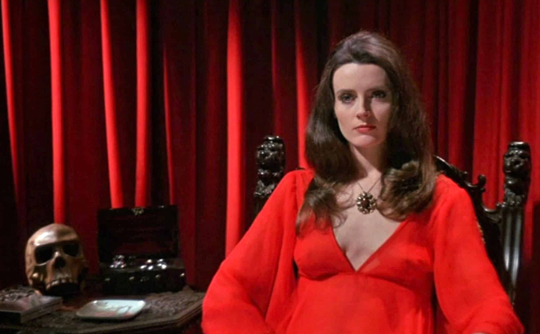
Stephanie Rothman worked in a time when women were rarely behind the camera, even more so in exploitation filmmaking. Cutting her teeth under Roger Corman, director Rothman came into her own with the exploitation classic The Student Nurses. Then, like other genre filmmakers, she turned her attention to vampires, only she gave it her own feminist twist. Swapping creaky gothic castles for a sun-baked desert landscape, The Velvet Vampire offers some fresh ideas to a very well-trodden territory. Unlike other vampire films of this era in which women are mainly victims clad in see-through nightgowns, the ladies of The Velvet Vampire are fully developed characters with dreams, carnal desires, and a thirst for blood. They have actual lines of dialogue! They think! They plot! They are horny! Women are nude here too, but they are in control. That is, until they aren’t. (AC)